
Prepare Your Land Before Construction Starts
House pad construction and full site preparation services for rural properties in Glen Rose, Texas and surrounding areas.
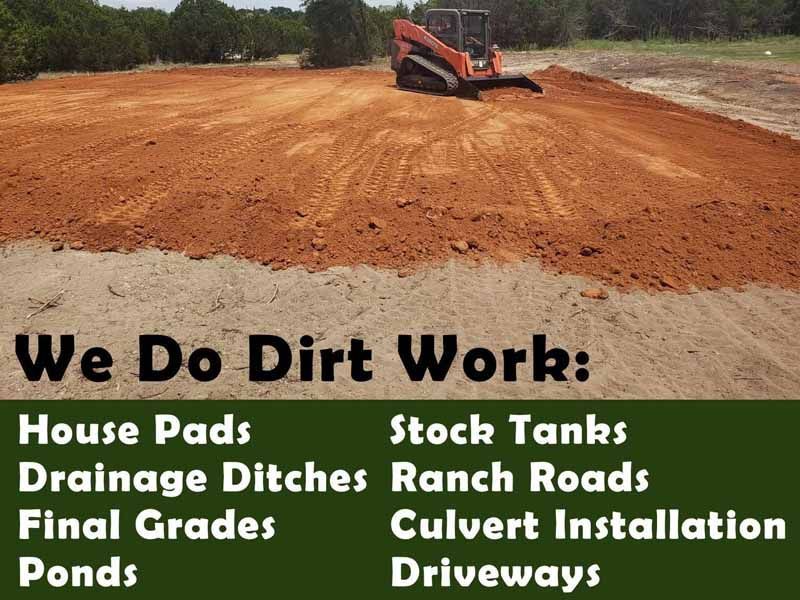
If you are planning to build a home or outbuilding on undeveloped land in Glen Rose and surrounding areas, the first step is not the foundation itself but the site preparation that makes a stable foundation possible. Raw land often has uneven terrain, vegetation, drainage issues, and soil inconsistencies that must be addressed before any concrete is poured. PalmTex LLC clears, grades, and levels your building site, then constructs a compacted house pad that provides a flat, stable surface ready for the foundation crew to begin work.
Our process includes clearing trees, brush, and rocks from the building area, removing topsoil if needed, and grading the site to ensure proper drainage away from the pad. We then bring in fill material, spread it in layers, and compact each layer to create a firm base that will not settle unevenly over time. Accurate site prep reduces foundation issues and long-term structural problems. If you are building outside city limits in Glen Rose and surrounding areas, we prepare your property for a stable, construction-ready foundation that meets the needs of rural construction.
If you have land ready for development and need the site prepared before your builder arrives, reach out to discuss your project timeline and site conditions.
We begin by walking the property with you in Glen Rose and surrounding areas to identify the building location, review any existing surveys or setback requirements, and check the natural slope and drainage. Once the area is marked, we use a bulldozer or excavator to clear vegetation and remove any large rocks or debris. If the topsoil is not suitable for compaction, we strip it and set it aside for later use in landscaping or drainage areas.
After clearing, we bring in graded fill material and spread it in layers across the building area, compacting each layer with heavy equipment to prevent future settling. Once complete, the pad sits level and slightly elevated above the surrounding grade, so water drains away instead of pooling near the foundation. You will see a flat, firm surface that feels solid underfoot and shows no soft spots or depressions.
We also grade access roads or driveways leading to the pad and install temporary drainage features if needed to protect the site during construction. This service does not include septic installation, utility trenching, or foundation work, but it does ensure the site is ready for those trades to begin without delay or unexpected ground issues.
What to Know Before Preparing Your Site
Landowners building in rural areas often have questions about timing, soil conditions, and what needs to happen before construction equipment arrives on the property.
Thickness depends on the existing soil and the elevation change needed, but most pads in Glen Rose and surrounding areas are built up with twelve to eighteen inches of compacted fill. If the ground is soft or the site has drainage concerns, we may add more material or include additional compaction passes.
We evaluate the soil during the initial site visit in Glen Rose and surrounding areas and recommend additional compaction, deeper excavation, or the use of different fill material if the native soil will not support the structure. In some cases, we may need to remove unsuitable material and replace it with engineered fill before building up the pad.
Before construction begins, the land must be properly prepared, and skipping or rushing this step often leads to foundation cracks, drainage problems, or delays once framing starts. If you are ready to move forward with a build in Glen Rose and surrounding areas, contact PalmTex LLC to schedule a site evaluation and discuss your preparation needs.